T H E P L A C E S · I
F R E I B U R G
Herdern
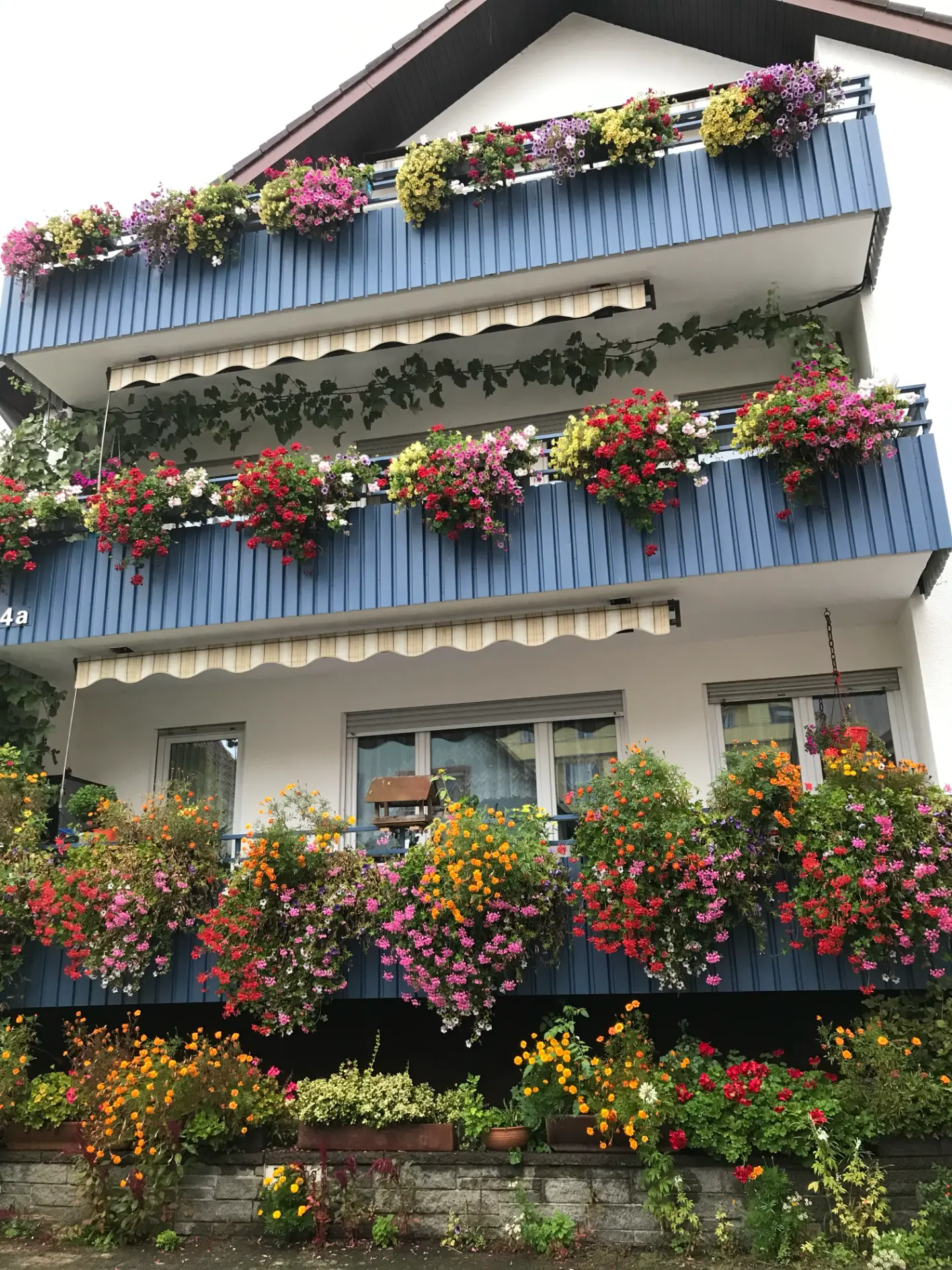
You can leave the house after supper and be under trees before the light goes. Not driving to a trailhead, not planning it the night before — walking to the top of your own street until the houses give out and the path starts. Along the eastern and southern edges of Freiburg this is unremarkable. The Black Forest comes down to the last row of gardens, and the hills do not sit at a distance being scenery. They begin where the pavement ends, and they are yours on a Wednesday.
The city is built into that arrangement rather than beside it. The Dreisam comes down out of the mountains and runs straight through the middle of it, and the paths along its banks are not a promenade you visit but a route you use — eight and a half kilometres of made path on the southern side, the way people actually cross from the east of the city to the west, on foot or on a bicycle, with the water on one side and the town on the other. The Schlossberg stands immediately over the eastern edge of the old town: from the Schwabentor the path climbs to the Kanonenplatz and the view opens over the roofs towards the Vosges. Down in the streets the Bächle still run, narrow channels of water set into the pavement, centuries old and still running. The whole place operates at the scale of a long walk.
Go further and it does not stop. Ride south on a Saturday morning and the vineyards start on the slopes above Merzhausen, then villages with their own churches and their own wine, the Vorbergzone rising on your left towards the Schönberg. Ride west and the Rhine is there, and past it Alsace, and Colmar is not a foreign expedition but a plausible day. Freiburg is not a city divided into the part you live in and the part you go to. It is one piece of usable ground, and a bicycle covers most of it.
What makes it a place to live rather than to admire is that the year keeps changing what it offers instead of taking it away. In spring the Dreisam is full and loud, the evenings stretch out, and the hillside vines come back into leaf while the forest is still bare enough to see through. Summer is genuinely hot — this is one of the warmest cities in Germany, down in the trough of the Upper Rhine — and the whole rhythm of the day reorganises around shade and water and the second half of the afternoon. The sealed centre runs several degrees warmer than the ground around it, and by late summer the same river that was loud in April can be running thin. Then the cold air comes down out of the Black Forest at night, and comes down reliably enough that the city now protects the channels it arrives by. Then autumn arrives: the vintage in the Markgräflerland and the Kaiserstuhl, the forest turning above the town, the light going long and low across the slopes. Then winter strips it back — vines cut to stumps, the hill paths bare and open and suddenly showing you the whole plain through the trees. The tram matters more.
That is the life. The remaining question is where inside it to live, and Herdern finished first in our Freiburg comparison, ahead of Wiehre, Altstadt, Vauban and Rieselfeld.
Herdern was a village before Freiburg absorbed it in 1457, and it has not entirely stopped being one. It grew wine — the church on the old square is St. Urban's, named for the winegrowers' saint, and one vineyard is still there below the panorama road, kept when the rest of the slope was sold for building in the 1890s and covered in the Jugendstil villas that gave the district its face. On Tuesday and Friday afternoons the market goes up on that square and stands until six, which makes it a market for people who live there rather than people passing through. You walk down for it. There is bread, and whatever the season is doing on the stalls, and you carry it back up.
The rest of the week is arranged the same way. Herdern keeps two small parades of shops rather than one, some six hundred metres apart — the old village street at one end, Habsburgerstraße at the other — and each has a grocer, a baker and a chemist standing almost shoulder to shoulder. Live near either and the ordinary week asks nothing of you but a short walk; both streets keep a bakery open on Sunday mornings. The old town begins a little way down the hill, and the tram is there for the days it rains.
Behind the houses the ground goes up. The Eichhalde runs a kilometre and a half along the hillside above the roofs, with the sequoias that same mayor planted standing over the gardens; above the road there is a meadow, and above the meadow the nature reserve and the Roßkopf and as far as you care to walk. The Glasbach comes down off the mountain and through the district on its way to the city. Bakery below, forest above, on the same street.
The bargain is the hill itself. Everything you buy is bought low — both parades sit in the flatter part of the district — and the streets people want most, the quiet ones with the outlook and the deep gardens, are the ones above them. Live up there and every errand is a pleasant walk down and a working walk back, in every weather, with the bags. The houses are beautiful and they are old, with all that means about stairs and windows and heating bills, and they are not cheap: Herdern asks noticeably more than the Freiburg average, in a city where finding anything at all is hard, and the housing cooperatives that make Freiburg affordable for so many are not, in practice, an immediate way in for someone who needs a home on arrival. And the summers here are the city's summers. We found nothing that lets us promise you the hillside sleeps cooler than the valley, whatever the neighbourhood's old nickname of Little Nice would like to suggest.
Wiehre would put you in the forest faster. The Altstadt would put more city at your door. Vauban is the braver idea and Rieselfeld the wider horizon. Herdern is simply where it becomes hardest to find the thing you have given up — the address where the market and the woods and the way into town all belong to the same afternoon.
We did not choose Freiburg in order to live in Herdern. We chose Herdern because it seemed the best place from which to live Freiburg.
P R A C T I C A L C O M P A N I O N
The portrait states the judgment. The companion works it out in full: the city and the residential choice, Herdern itself, the housing market and what it costs, the ordinary week, the ground and the landscape, the year, the four districts that did not win, and the evidence behind the ranking.
Read the Practical Companion →A S H O R T G U I D E F O R F R I E N D S
The companion is written for someone deciding whether to live here. This one is for the week after they have arrived: what to do with visitors who are staying in the house rather than passing through, where to take them, what to leave alone, and how a guest week fits around an ordinary one.
Read the guest guide →Hoc est opus. Et satis est.