T H E H O M E I N D E X
P A R I S
Vincennes
Where we would live for two or three months
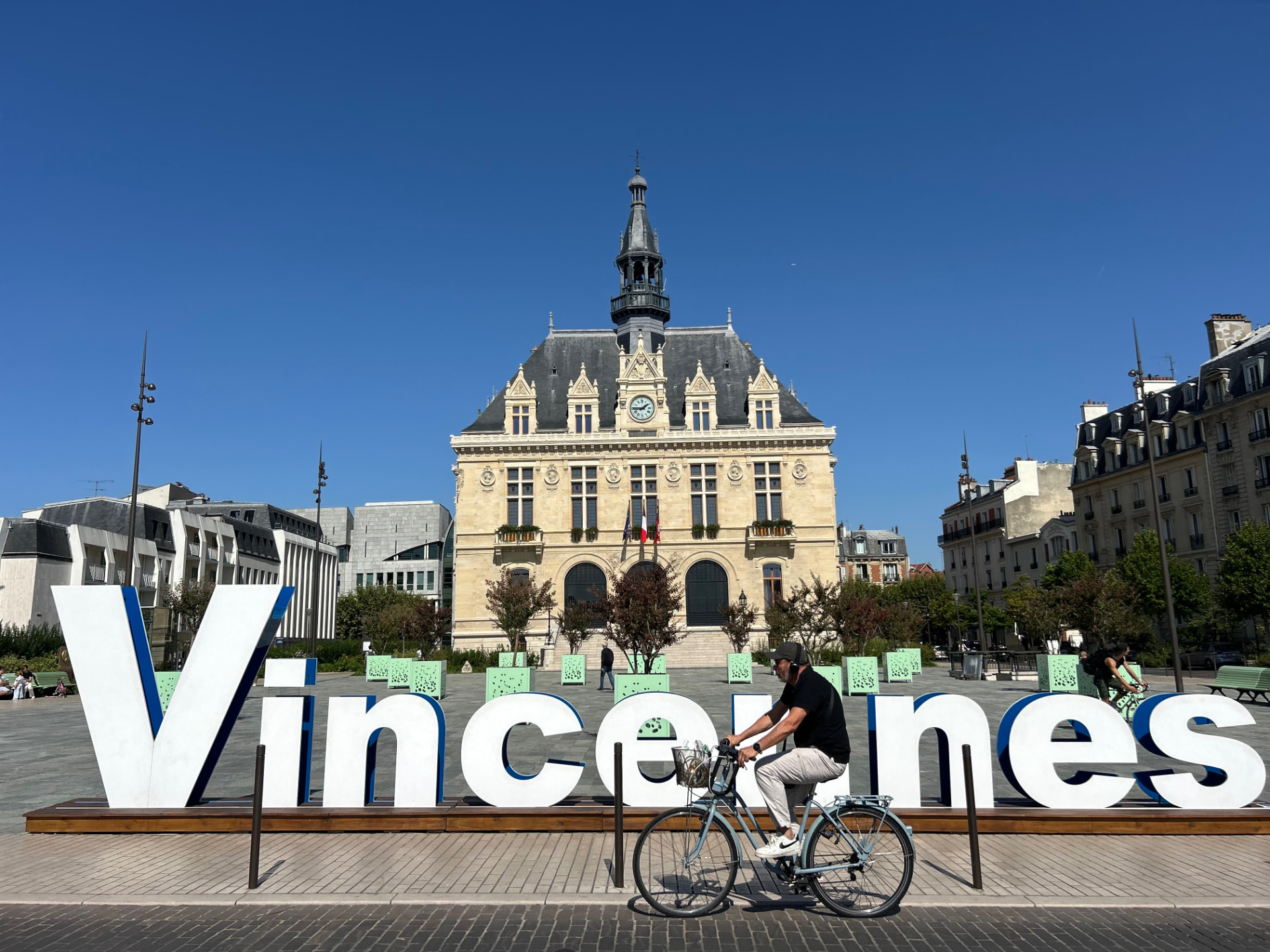
The answer to where would we live in Paris turns out not to be in Paris.
Vincennes is a commune of the Val-de-Marne, outside the Périphérique, with its own mayor and its own postcode: a small dense square of streets pressed between the eastern edge of the city and a forest. On a map it looks like a concession. It is not.
The question was never which arrondissement is the most Parisian. It was where two or three months would actually go best. Not a holiday and not a move. A stay long enough that the difference between visiting and living stops being theoretical. Long enough to have a bakery; not long enough to have a doctor.
Put that way, the whole choice comes down to a single distinction.
Paris proper gives you more incidental Paris. You walk home past things. The city arrives unbidden, a street you did not mean to take, a façade at the end of it, and over two months that accumulates into something no suburb can manufacture.
The edge gives you a more complete ordinary town. Its own market three mornings a week, its own high street, its own church, its own quiet at ten at night.
Both are real. But a three-day visit is made of incidental Paris, and a ten-week stay is made of Tuesdays.
Forty places across greater Paris were considered. Vincennes finished first.
Here is what that means from the streets we would live on, a few blocks between rue du Midi and avenue du Château.
The market is two minutes away. It runs on Tuesday, Friday and Sunday mornings, half past seven until half past one: fishmongers, cheesemongers, growers, a butcher, flowers, whatever the season is doing. Three mornings out of seven, two minutes from the door. You stop planning food and start buying what is good on the day you are near it.
Bread is not a problem either. Five serious bakeries sit within a few hundred metres of each other, one of them open from half past six in the morning until half past eight at night, every day of the week. A full supermarket at two minutes. The nearest pharmacy under two.
The RER is three minutes away, and it puts you in the middle of Paris faster than a good many Parisians can cross their own city. The métro terminus is five. Because it is a terminus the train is starting its run, which usually means a seat, and it runs the whole historical axis without changing: Bastille, Hôtel de Ville, Châtelet, the Louvre, Concorde, the Champs-Élysées.
And nine minutes south the town simply stops. Nine hundred and ninety-five hectares of forest begin, about a tenth of the area of Paris and roughly three times the size of Central Park. Thirteen kilometres of continuous running under trees. A six-lane track inside it, free, open from seven in the morning until ten at night.
By ten the town is quiet.
That is the finding, and it is not what anyone expects. Vincennes does not win by giving you more Paris. It wins by making the repeated days easier while keeping Paris a quarter of an hour away.
It is not a perfect answer, and the imperfections are specific.
The forest is nine minutes away, not at the door. Vincennes' housing sits north of the château and the wood begins south of it, so no central address has trees at the end of the street. Nine minutes is a warm-up rather than a threshold, and on the mornings you want to walk straight out into the wood you walk out into a town first.
The apartment is harder than the town. Furnished stock here runs to studios and one-bedrooms, and the two-bedroom of fifty-five to seventy square metres this life wants is the scarce end of the market. Only a handful were visible when we looked, and there may be stretches when nothing suitable exists in the streets we recommend.
It is also expensive, and this surprises people. Vincennes sits among the costlier communes in Île-de-France, above most of the western suburbs it is naturally compared with, including Courbevoie, which this portrait recommends elsewhere and which is roughly a quarter cheaper. Only Neuilly-sur-Seine clearly exceeds it. Those figures describe the purchase market; the short furnished let this stay would require is a thinner market with less published data behind it, and the same premium should be assumed rather than demonstrated.
La Défense is about forty minutes, door to office, direct and without a change. That is a defensible cost once a week and a poor one five times.
And somewhere around the fifth or sixth week there is usually a moment when being beside Paris rather than inside it stops feeling like a convenience and starts feeling like a distance.
Which is the point at which the alternatives stop being runners-up and become the actual choice.
If the incidental Paris is the point, the 15th is the better answer: residential almost throughout, quietly and genuinely provisioned, and inside the thing rather than beside it.
If La Défense is daily, look west. Courbevoie is twelve minutes and Suresnes fifteen, and no forest is worth an hour a day to everyone.
If the ordinary week is the point, Vincennes remains the answer.
Two or three months, then. A market three mornings a week and a bakery you stop choosing between. A forest close enough to train in and far enough away that you notice you have gone somewhere. An empty parish church two minutes from the door on a weekday afternoon. One line into the middle of Paris whenever the evening deserves it, and a town that is quiet by ten when it does not.
Not the Paris of three days. The other one, where the week takes care of itself and the city becomes what you do with the time it gives back.
The ranking chose Vincennes.
The Companion asks what happens next.
E V I D E N C E R E G I S T E R
Apartment prices in Vincennes were estimated between roughly 8,200 and 9,250 euros per square metre in August 2026, with one source placing them near 10,000. Comparable western communes: Neuilly-sur-Seine 10,330, Boulogne-Billancourt 8,140, Issy-les-Moulineaux 7,400, Montrouge 7,100, Clichy 6,870, Courbevoie 6,630. Portal aggregations of asking prices; they disagree with one another and indicate shape rather than price.
Purchase market only; no comparable data was found for short furnished lets.
Sources: efficity, hosman, PAP, MeilleursAgents, Orpi.
Correction contributed by a reader following publication.
Hoc est opus. Et satis est.
Read the Practical Companion →
A S H O R T G U I D E F O R F R I E N D S
The companion is written for someone deciding whether to stay here. This one is for the week after they have arrived: Paris in small doses on Line 1, the first walk into the Bois, the market on Sunday morning, and the practicalities that catch visitors out.
Read the guide →Paris: Vincennes. The Practical Companion, complete, as a PDF.